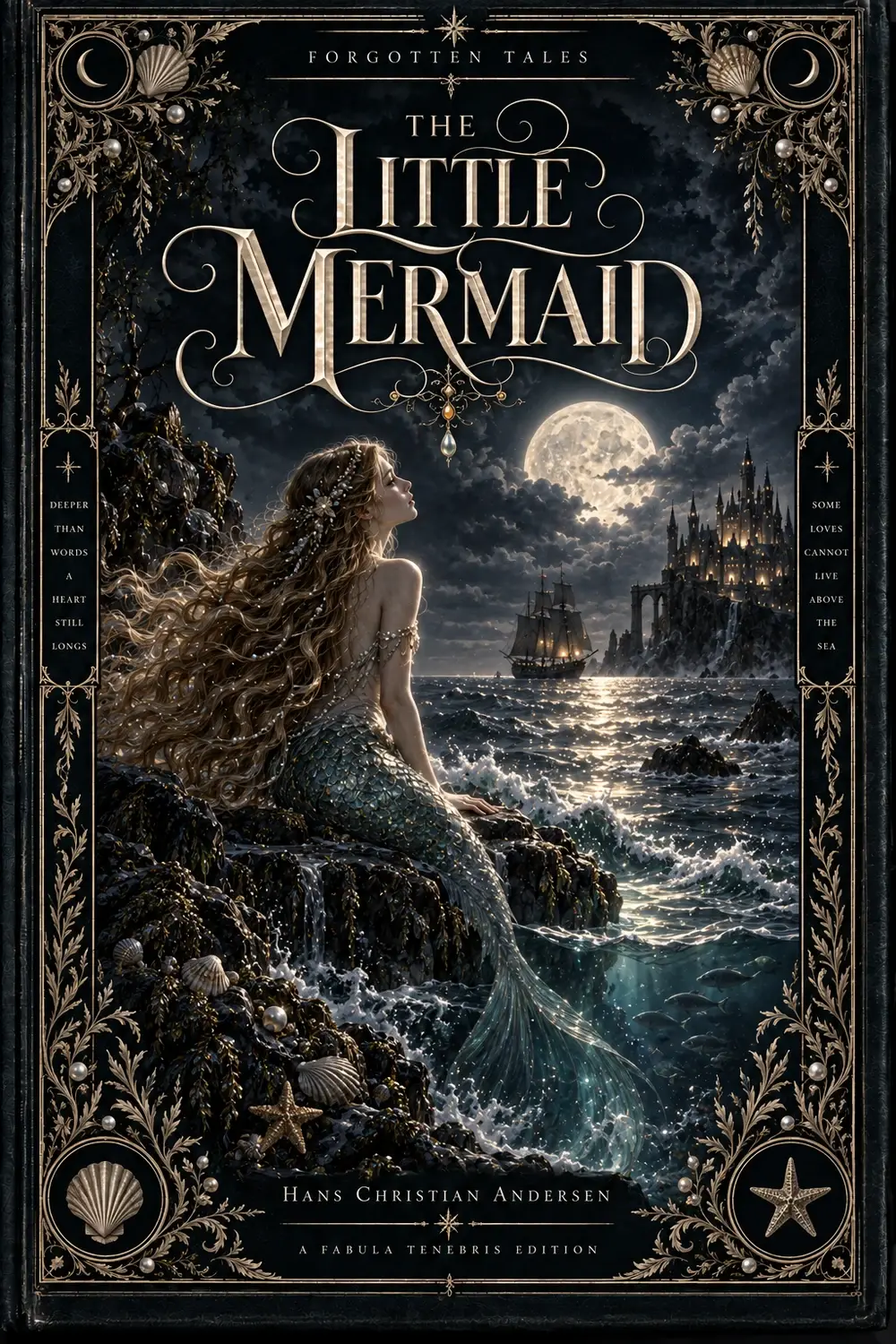
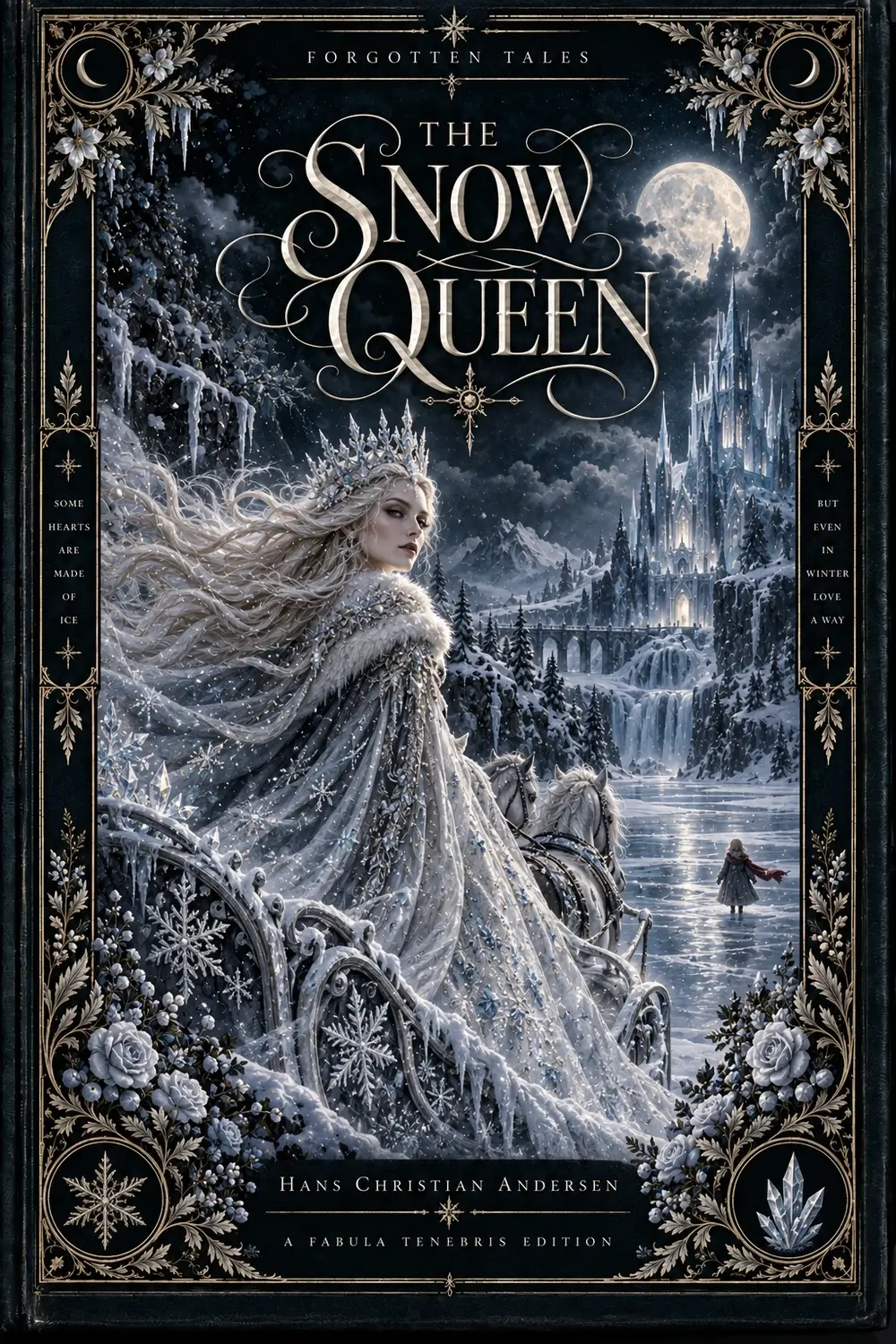
A golden slipper. A wolf with no rescuer. A mermaid whose wish is more than love.
Searching for an original fairy tale version often means looking for what a familiar adaptation left out. These six tales lead back to particular literary versions by the Brothers Grimm, Charles Perrault, Giambattista Basile and Hans Christian Andersen—each with its own ending, not one shared formula.
Editorial guide by Fabula Tenebris · Updated
Six familiar tales, different shadows
The comparisons below mention endings. Content notes appear before each full tale; reading is free and requires no account.
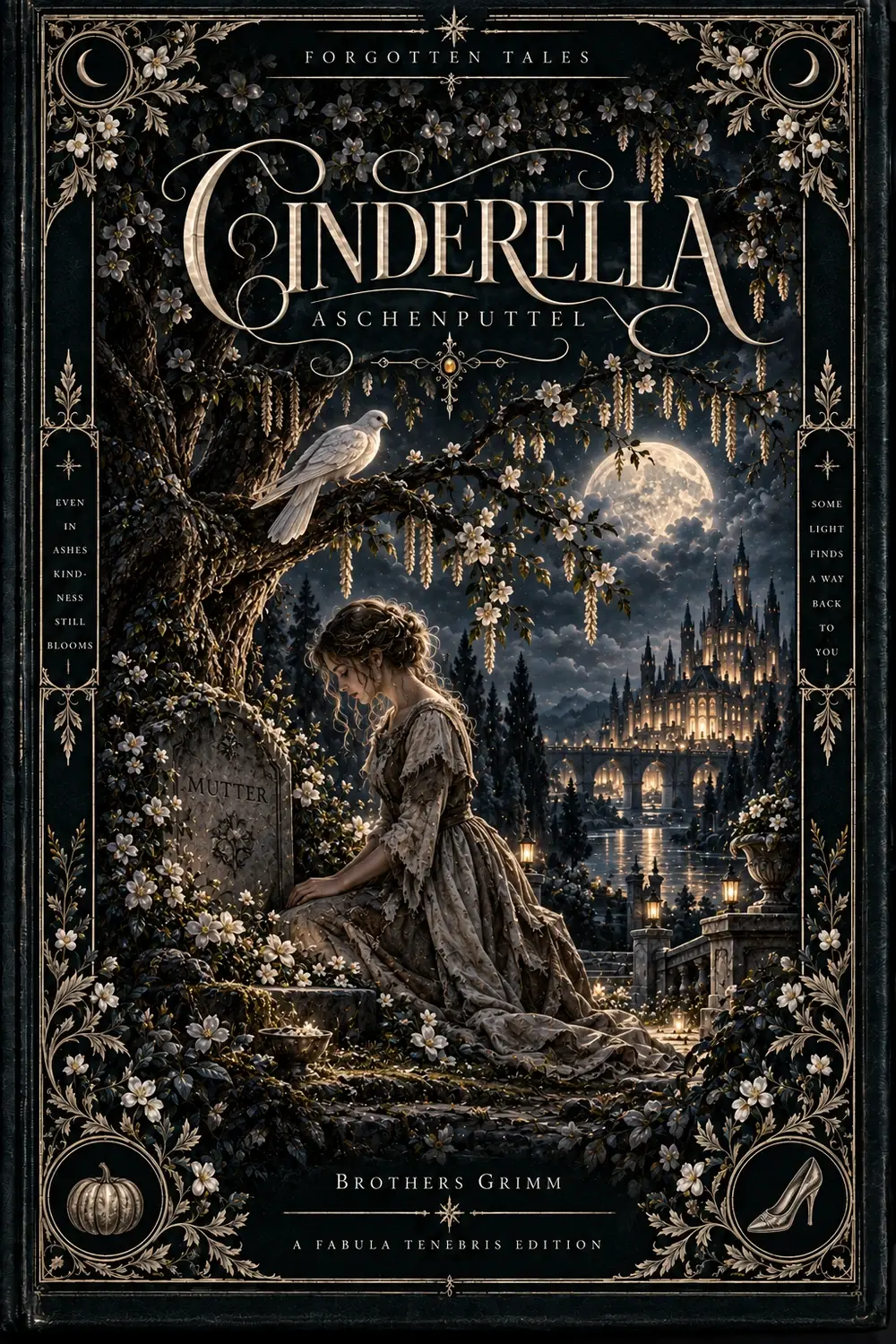
A hazel tree and birds take the place of a fairy godmother. The golden slipper reveals the stepsisters’ deception, and the wedding brings a violent punishment.
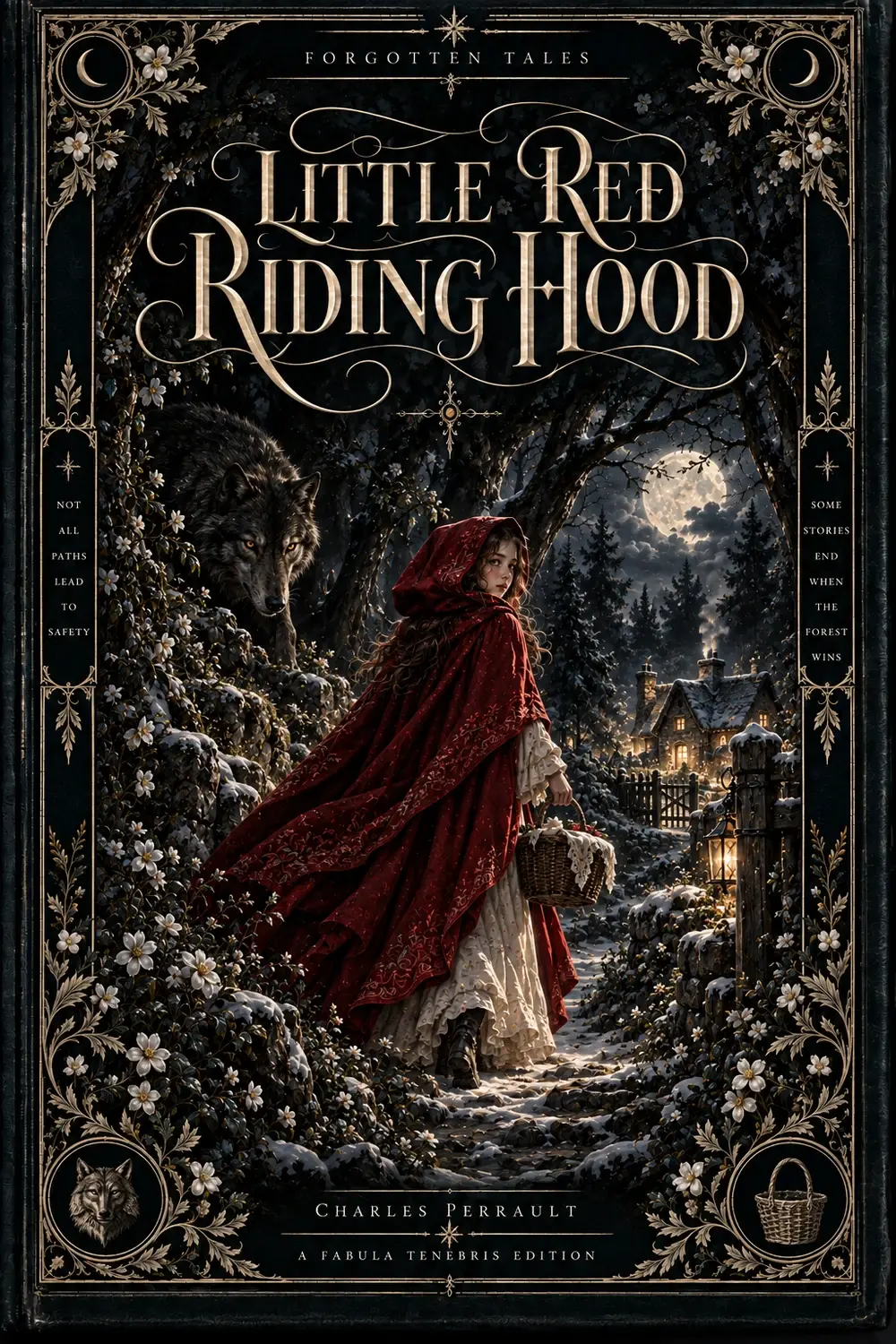
There is no huntsman’s rescue. Perrault follows the wolf’s victory with a moral about predators who conceal danger beneath polite and charming behavior.
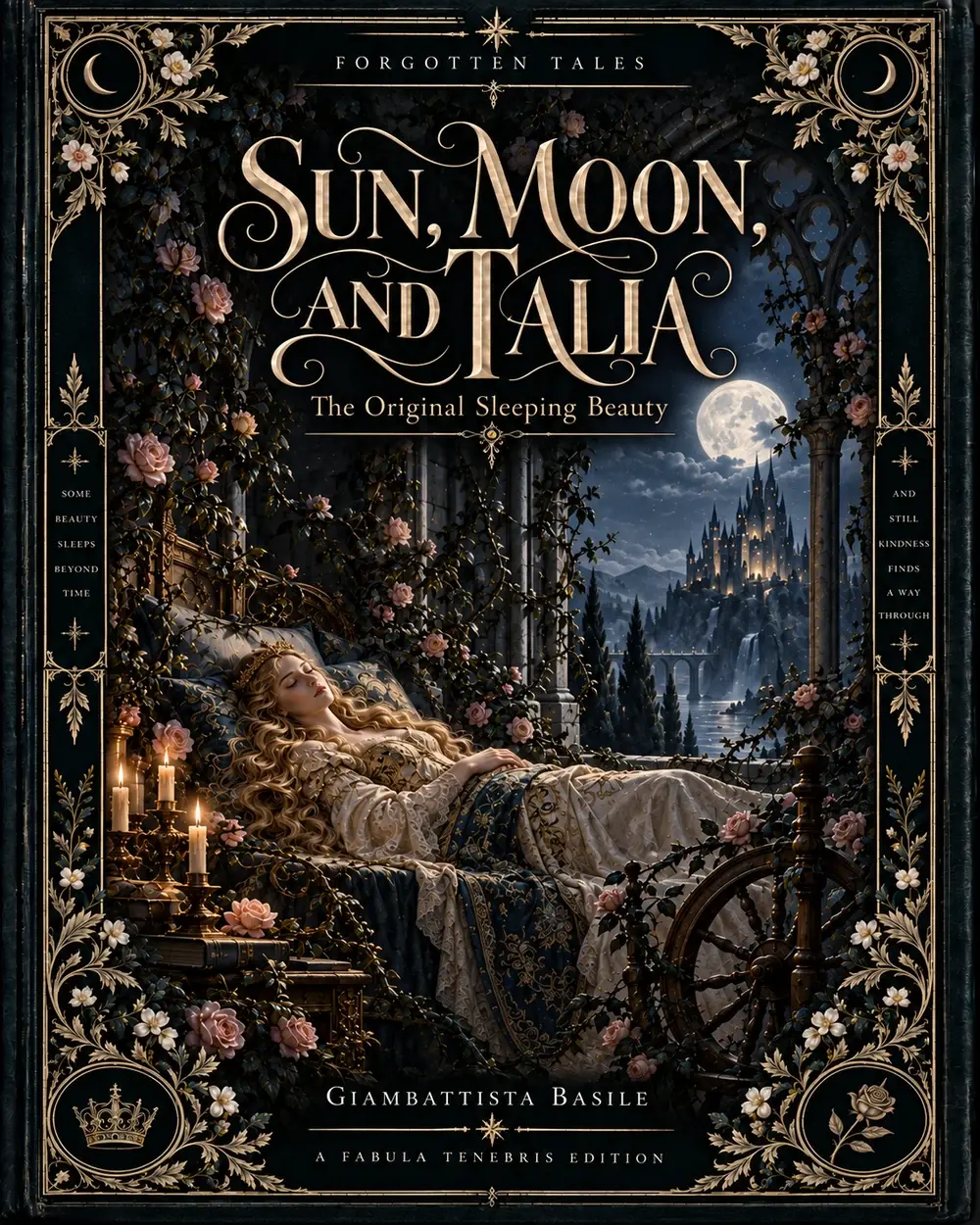
A flax splinter causes Talia’s sleep; a child removes it. The story continues beyond her awakening into a queen’s murderous plot. It is not a story of a rescuing kiss.
The bargain costs her voice and makes each step painful. The prince marries someone else; her refusal to kill him leads beyond sea foam to the daughters of the air.
Gerda’s devotion, not a royal romance, carries the story. The mirror’s fragments distort Kay’s perception, and the journey to reach him unfolds across seven connected stories.
Not in the same way. In this selection, “dark” can mean physical violence, deceptive kindness, grief or sacrifice. A frightening journey can still end happily. Comparing the specific text is more revealing than assuming every old tale ends in tragedy.
Are these fairy tales suitable for young children?
Do not assume that a familiar title makes a version suitable for every reader. These retellings retain disturbing material. Basile’s Sun, Moon, and Talia includes sexual violence and threats to children; the Grimm tales include bodily harm and threatened cannibalism. Check the content notes and preview a story before sharing it with a child.